Fire and Smoke Damage Restoration Arlington TX | Full Property Recovery
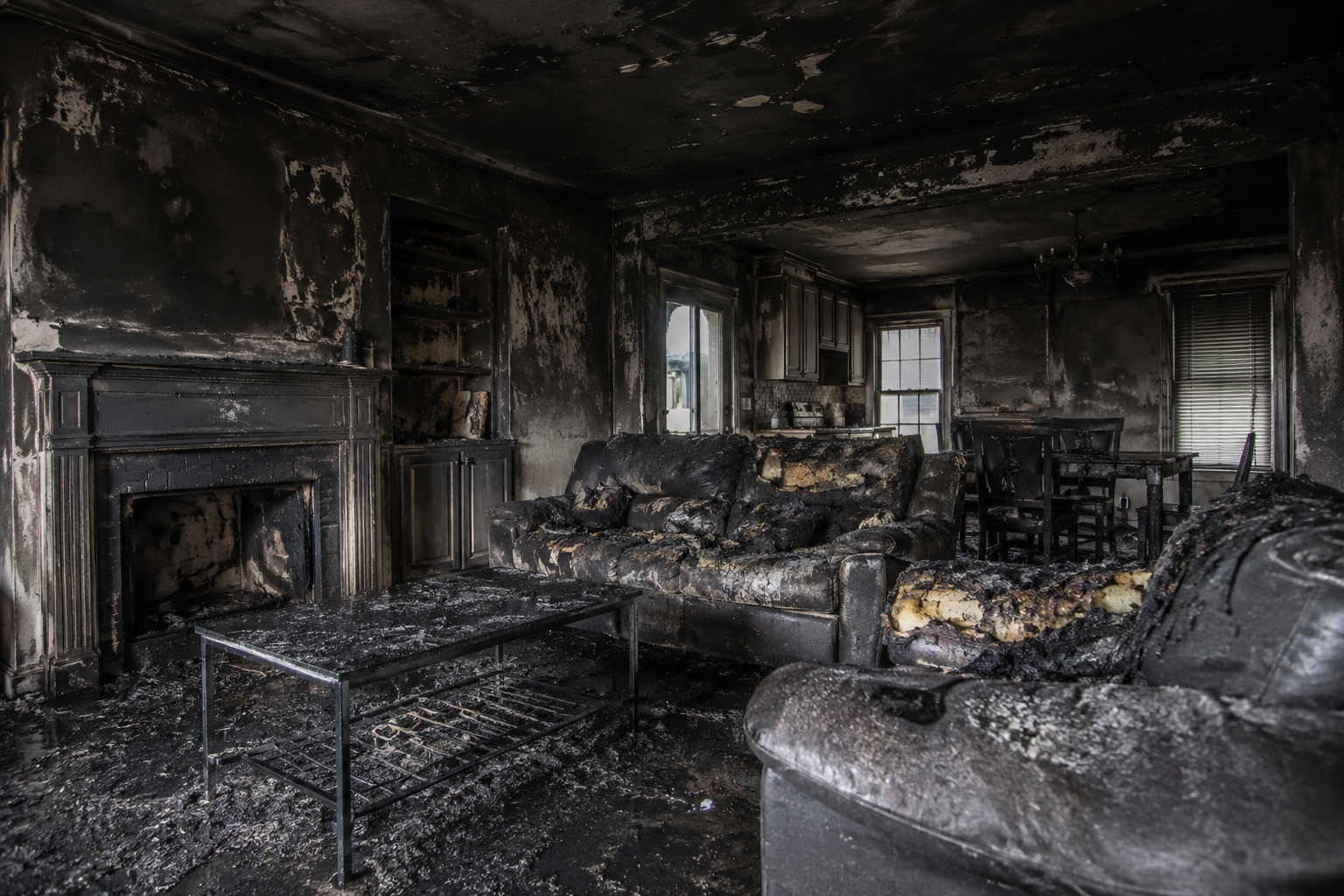
Fire damage extends far beyond the burn zone. Smoke, soot, and firefighting water affect your entire property. We handle the complete recovery from structural assessment to final rebuild.
(817) 231-8660Request Emergency Help
We respond day and night.
Quick Answer
Fire and smoke damage restoration covers soot removal from all surfaces, odor elimination using hydroxyl or ozone treatment, HVAC decontamination, removal of firefighting water, structural drying, and full rebuild. Smoke travels through an entire structure within minutes, so affected areas extend well beyond the room where the fire occurred.
Fire and smoke damage restoration in Arlington, Texas requires a recovery plan that goes well beyond cleaning up what burned. Most people are surprised to learn how far smoke and soot travel from the fire’s origin, and how significant the water damage from firefighting can be. A kitchen fire that is contained to one room can deposit soot throughout an entire house within minutes. The fire suppression water can saturate walls and subfloors that were never touched by flames. Both problems demand immediate professional attention.
How Smoke Travels Beyond the Fire Zone
Smoke rises and travels with air pressure differentials. In a typical Arlington home, that means smoke produced in one room moves through door gaps, HVAC returns, light fixture openings, and interior wall cavities within the first few minutes of a fire. By the time the fire department arrives and suppresses the blaze, smoke has already deposited soot on every surface in the home — not just in the room of origin.
Smoke residue is acidic. Left on surfaces, it continues to corrode metal fixtures, electronics, and structural materials. Smoke odor embeds in porous materials including drywall, insulation, wood framing, carpet, and upholstery. Simply airing out the house does not remove it. The odor compounds bond to materials at a molecular level and require specific chemical neutralization or physical removal.
HVAC Contamination After a Fire
This is the detail that restoration companies sometimes overlook and homeowners almost never know about. Your HVAC system is a closed-loop air circulation network. When a fire produces smoke, that smoke is drawn into the return air vents and deposited throughout your duct system. Every time the system runs after a fire, it redistributes soot and smoke odor to every room in the house — including rooms that appeared unaffected.
Proper fire restoration includes full HVAC decontamination: cleaning or replacing duct liners, cleaning the air handler and coil, and installing fresh filters. This is not optional if you want the odor resolved. It is one of the most critical steps in the process and one of the most commonly skipped.
Firefighting Water Damage
Modern fire suppression puts out significant volumes of water. A residential structure fire handled by the Arlington Fire Department can involve hundreds of gallons of water. That water soaks into flooring, subfloors, wall cavities, and ceiling assemblies. It has to be extracted and the structure must be dried to documented target moisture levels — the same process as any major water loss.
The combination of fire heat, smoke residue, and water creates conditions where mold can develop in wall cavities within 24 to 48 hours of fire suppression. This is why the restoration process must begin immediately — not after the insurance adjuster visits, not after the property is cleaned up. Both our water damage restoration and mold remediation teams coordinate on fire restoration jobs to ensure nothing is missed.
Our Fire and Smoke Restoration Process
First, we secure the property — board up openings, tarp roof damage, assess structural safety. Then we document everything with photographs, moisture readings, and damage assessment reports. Water extraction and structural drying begins in parallel with soot removal. We clean all structural surfaces using the correct method for each type of soot residue (dry, wet, protein-based smoke each require different chemistry). HEPA vacuuming removes loose particles. Odor elimination uses hydroxyl generators or thermal fogging depending on the property. HVAC is cleaned and cleared. Then we rebuild.
Insurance Claims for Fire Damage in Texas
Standard homeowners policies in Texas cover fire damage, including structure, contents, and additional living expenses if your home is not habitable during restoration. We provide a complete documentation package for your insurance company including scope reports, damage photos, moisture logs, and equipment records. Fire claims can be complex — do not let the adjuster’s initial estimate be the final word. You have the right to dispute it and to request a re-inspection if the scope changes as restoration proceeds.
What We Address
- Structural fire and char damage
- Soot removal from all surfaces
- Smoke odor elimination
- HVAC duct cleaning and decontamination
- Firefighting water extraction and drying
- Content cleaning and pack-out
- Mold prevention after water exposure
- Full structural rebuild
Do not use your HVAC system after a fire until it has been professionally inspected and cleaned. Running it distributes soot and smoke compounds throughout every room in the house.
Frequently Asked Questions
Typically no, for significant fire events. Soot residue contains toxic compounds. The air quality is not safe for continued habitation until after professional cleaning and air testing. Your homeowners policy may include additional living expense coverage for a hotel or rental while your home is being restored.
Cleanup and soot removal takes several days to a week or more depending on the size of the affected area. Structural drying from firefighting water takes 3 to 5 days. Full reconstruction after a significant fire can take 4 to 8 weeks depending on the scope of structural damage and material lead times.
Yes, if the remediation is done completely. Odor compounds that embed in building materials require either chemical neutralization or physical removal of the affected material. Masking sprays and air fresheners do not work. Hydroxyl generators or thermal fogging neutralize odor molecules in the air and on surfaces. HVAC cleaning eliminates duct-borne odor distribution.
Yes. Standard homeowners policies in Texas cover fire damage including any water damage caused by fire suppression. This is considered part of the fire loss event. Document all water-affected areas before any cleanup begins and include it in your claim documentation.
Request a Free Assessment
We respond day or night. Describe your situation and we will call you right back.