
Arlington Foundation Movement vs. Slab Leak — How to Tell the Difference
 By Adam Wilson, Arlington TX Water Damage
Quick Answer
In Arlington TX, clay soil causes both foundation movement and slab leaks — and they can look nearly identical from the surface. Foundation movement from clay shrinkage shows up as cracks in drywall along door frames, sticking doors and windows, and sloping floors — but no moisture. A slab leak produces the same structural symptoms plus warm floor spots, running-water sounds with fixtures off, water bill increases, and eventual moisture or mold at floor level. Thermal imaging and moisture meters are the only reliable way to distinguish them.
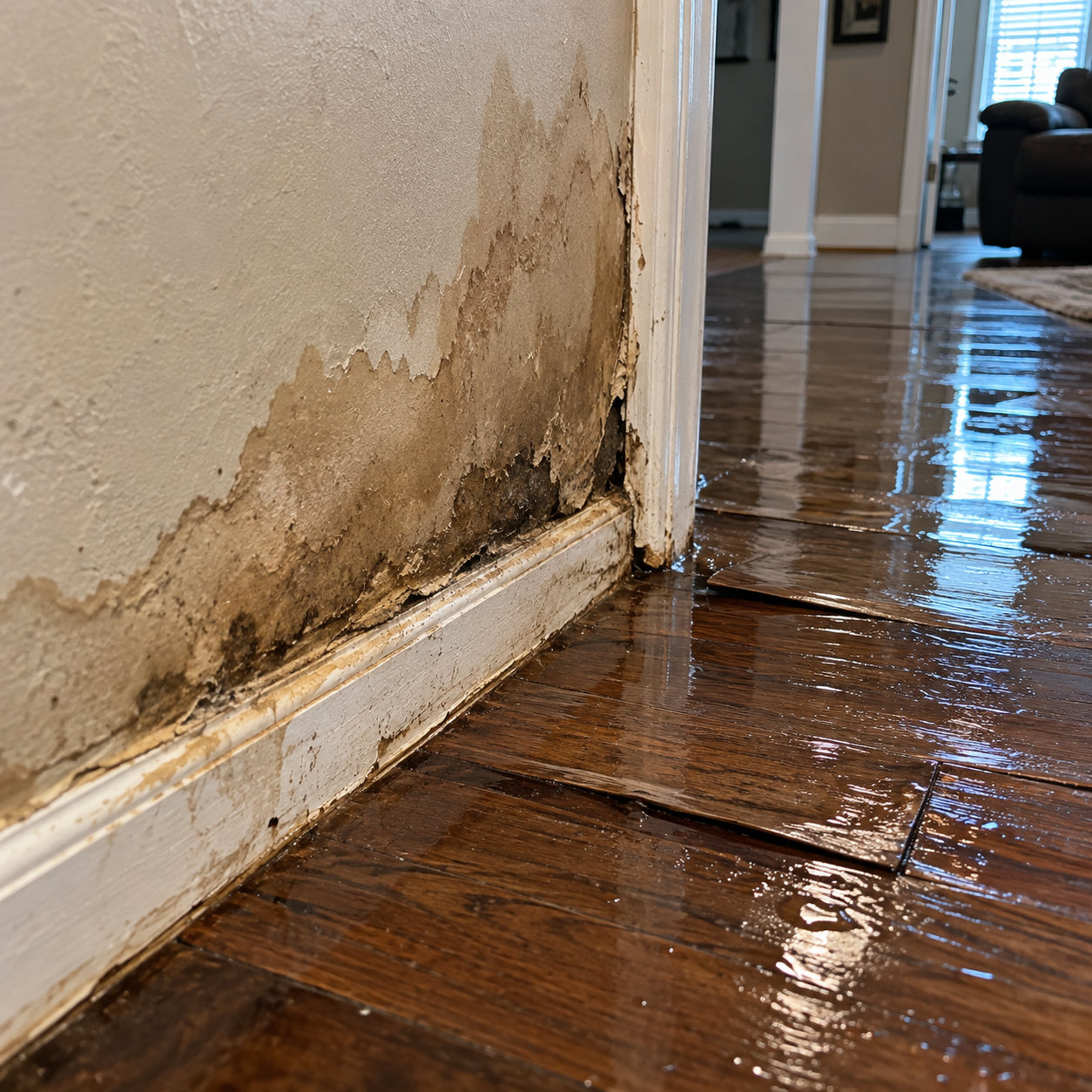
If you own a home in Arlington and you have noticed cracks appearing in your drywall, doors that suddenly stick, or floors that seem slightly off-level, you have encountered one of the most frustrating diagnostic problems in North Texas homeownership. The cause could be clay-driven foundation movement — a normal, manageable consequence of living on Blackland Prairie soil. Or it could be a slab leak that has been quietly running for weeks, saturating the soil under one section of your foundation and causing it to behave differently than the rest. The symptoms can look nearly identical until the leak has been going long enough to produce moisture signs.
Getting this distinction right matters because the response is completely different. Foundation movement from clay shrinkage and expansion is typically addressed by a foundation repair contractor and may not be a covered insurance claim at all. A slab leak is a plumbing repair followed by a water damage restoration job, and it is almost always a covered insurance event if caught before it becomes a neglect argument.
What Clay-Driven Foundation Movement Looks Like
Blackland Prairie clay expands when wet and contracts when dry. In Arlington’s climate — wet springs, brutally hot and dry summers — this cycle runs twice a year with enough force to move concrete slab foundations measurably. The signs of clay-driven foundation movement include diagonal cracks running from the corners of door frames or window frames, gaps appearing between wall sections and the ceiling, floors that develop a perceptible slope over time, and exterior brick that develops stair-step cracks in the mortar joints.
Crucially, these symptoms appear without any moisture. There is no warm spot on the floor. There is no sound of running water. The water bill has not changed. The cracks tend to be distributed across the structure rather than concentrated in one area, because the soil movement under the slab affects a broad section of the foundation rather than a localized zone.
If the symptoms are seasonal — worse in late summer after a dry stretch, improving after significant rain — clay movement is the likely cause. This is not an emergency and it is not a water damage claim. It is a foundation issue to discuss with a licensed structural engineer.
What a Slab Leak Looks Like
A slab leak produces some of the same structural symptoms as clay movement — and this is where homeowners get confused. When a slab leak runs long enough, the water it releases changes the moisture content of the soil under a specific section of the slab. That localized soil saturation causes that section to behave differently than surrounding areas: it may heave slightly if the clay swells, or it may settle if the water erodes the soil support. Either way, the foundation moves differentially — and differential movement produces the same cracking and sticking-door symptoms as broad clay movement.
What distinguishes a slab leak is the presence of additional moisture-related symptoms. A warm or hot area on the floor is the most reliable early indicator of a hot water line leak. The sound of water running continuously when every fixture in the house is shut off is another strong signal. A water bill that increases by $30 or more without explanation points strongly toward a plumbing leak somewhere in the system. And eventually — usually after weeks of undetected leakage — you may notice damp baseboards, softening drywall at floor level, or a musty odor in a room that otherwise seems dry.
How to Distinguish Them
The most reliable field test you can do yourself is a water meter check. Shut off every fixture and water-using appliance in the house. Note the meter reading. Wait 30 minutes without using any water. Check the meter again. If it moved, there is an active leak somewhere in your plumbing system — and if you have also noticed structural symptoms, a slab leak is highly probable.
A licensed plumber can pressure-test the plumbing lines to locate the leak without opening the slab. Once a leak is confirmed or ruled out, the structural symptoms can be evaluated separately by a foundation engineer.
For water damage assessment after a confirmed slab leak, we use thermal imaging cameras that detect temperature differences caused by warm water migration through concrete, and calibrated moisture meters that measure moisture content in flooring and wall materials. These tools identify the full extent of water damage that no visual inspection can find. See our water damage restoration page for what the remediation process looks like.
Why Acting Fast Matters
Every week a slab leak runs undetected adds to the damage scope. The water migration path through the concrete and into wall systems grows. Mold begins establishing itself in moisture-affected wall cavities, particularly during Arlington’s summer months when temperatures and humidity inside affected wall spaces create near-ideal germination conditions. What might be a straightforward drying job at two weeks becomes a mold remediation project at six weeks. Call us at (817) 231-8660 as soon as a slab leak is confirmed, and we will assess the damage before it becomes a larger problem. For more on what hidden water damage looks like as it progresses, see our post on signs of hidden water damage.
Frequently Asked Questions
Run a water meter test: shut off all fixtures, note the meter reading, wait 30 minutes, and check again. If the meter moved, you have an active plumbing leak. Additional signs of a slab leak include warm floor spots over hot water lines, running-water sounds with all fixtures off, and water bill increases. Foundation movement from clay soil produces structural symptoms without moisture signs.
Yes. A long-running slab leak changes the moisture content of the soil under one section of the foundation, causing that section to move differently than surrounding areas. This differential movement produces the same cracking, sloping, and door-sticking symptoms as clay-driven foundation movement. If a slab leak runs for months, it can cause foundation damage that requires both plumbing repair and structural repair.
Texas homeowners insurance typically covers the water damage caused by a sudden slab leak — flooring, drywall, and structural materials affected by the water — but usually does not cover the pipe repair itself. Coverage depends on how quickly the leak was discovered. Damage from a leak that was known or should have been discovered through routine maintenance may be excluded as neglect.
Call a plumber first to locate and repair the leak. Once the plumbing is fixed, call us for a moisture assessment. The plumber fixes the pipe; we find and remediate the water damage the leak caused. Both calls should happen quickly — the longer the interval between the pipe repair and the moisture assessment, the more damage accumulates in wall systems and under flooring.
Request a Moisture Assessment
Fill out the form and we will call you back within minutes.