
Storm Damage Restoration Arlington TX | Local Storm Recovery
North Texas severe weather is no stranger to Arlington. Hail, high winds, tornadoes, and flash flooding all create water intrusion that needs professional restoration. We respond 24/7.
(817) 231-8660Get Help After a Storm
We respond within minutes, every hour of the day.
Quick Answer
In Texas, standard homeowners insurance covers storm damage from wind, hail, lightning, and tornadoes under most HO-3 policies. This includes roof damage, broken windows, and water entering through storm-created openings. Flood damage from rising water requires a separate NFIP or private flood policy and is not covered under standard homeowners insurance.
Storm damage restoration in Arlington, Texas starts with understanding what storms actually do in North Texas. Tarrant County sits in one of the most active severe weather corridors in the country. Spring brings supercell thunderstorms with large hail and damaging straight-line winds. Tornado activity in this part of Texas is real and documented. Summers bring dry heat broken by intense flash flooding events. This is not generic storm damage territory — these are specific, recurring weather patterns that create specific damage profiles.
North Texas Storm Types and How They Damage Homes
Hail is the single most common cause of roof damage in the Dallas-Fort Worth metro. When hail compromises roof shingles, the next rain event pushes water into the attic assembly, down through ceiling drywall, and into wall cavities. Many Arlington homeowners do not discover hail damage until water stains appear on their ceilings weeks after the storm. By then, mold has often already started growing in the attic sheathing and insulation.
Straight-line winds — the kind that hit the area regularly in spring storm systems — can lift ridge caps, blow in gable vents, and create openings in siding that allow water to enter horizontal surfaces during the rain that follows. These are not dramatic events that look like obvious damage. A single lifted shingle or a cracked ridge cap allows gallons of water per hour into a structure during heavy rain.
Tornadoes in Tarrant County have occurred in and around Arlington multiple times over the past two decades. Tornado damage creates complete structural openings that require immediate emergency securing before any restoration work can begin. The combination of structural damage, water intrusion, and sometimes fire from downed electrical equipment makes tornado recovery the most complex restoration scenario we handle.
Flash flooding — covered separately on our flood cleanup page — follows heavy rain events and is driven by Arlington’s flat terrain, clay soil, and creek system overflow. If your storm damage involved water entering from the ground up rather than through a roof or wall breach, that page covers the specific protocols for exterior water intrusion.
Immediate Steps After Storm Damage
Safety first. Do not enter the property if there is any structural damage, downed power lines nearby, or visible fire. Once the immediate emergency is clear, document everything you can see with photographs and video before anything is moved or cleaned. This documentation is your insurance claim. Call your insurer to report the claim and get a claim number. Then call us — we will arrive before your adjuster does and provide independent professional documentation of the full damage scope.
Emergency Securing After a Storm
If your roof has been breached or windows broken, the property needs to be secured immediately to prevent additional water intrusion. We provide emergency tarping and board-up services as the first step in storm damage response. This is both necessary to protect the property and typically required by your insurance policy — you have a duty to prevent further damage once the storm has passed.
Storm Damage Insurance Claims in Texas
Texas HO-3 policies cover wind, hail, lightning, and tornado damage as standard covered perils. Water that enters through a storm-created opening is covered as part of that same loss. Your insurer will send an adjuster to evaluate the claim — but adjusters are working with large claim volumes after major weather events and may not catch everything. We document the full scope independently and can work alongside your adjuster to ensure nothing is missed.
For storm-driven flood damage where water entered from outside rather than through a roof breach, see our emergency water damage page for immediate action steps. For the FEMA flood insurance and preparedness resources relevant to your area, visit ready.gov/floods.
Common Storm Damage Types in Arlington
- Hail damage to roof shingles and flashing
- Wind damage to siding and ridge caps
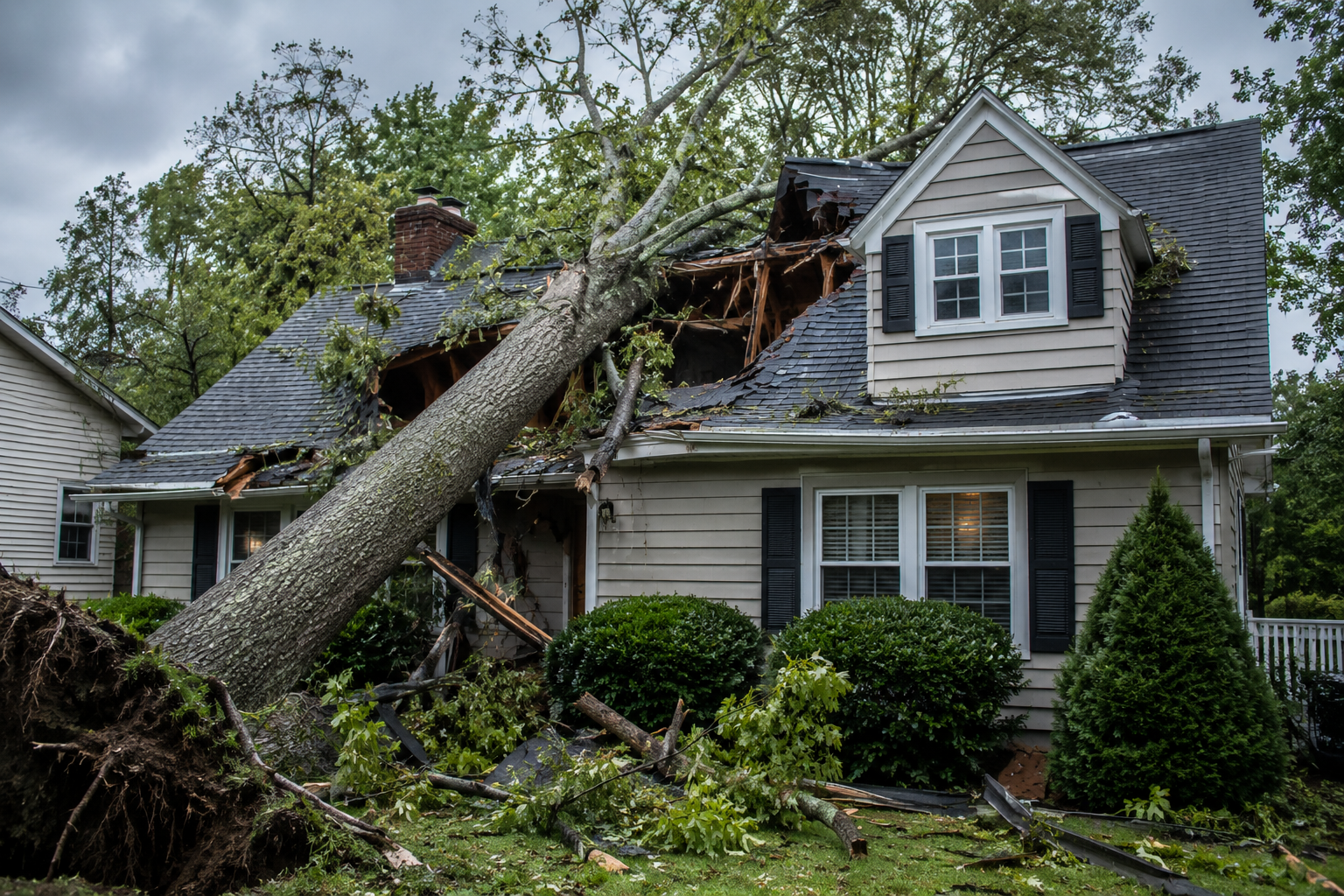
- Fallen trees and limbs through roofs
- Broken windows and door frame damage
- Flash flooding from creek overflow
- Lightning strike and associated fire
- Tornado structural damage
Arlington Storm Season at a Glance
- March-May: Peak severe weather, hail and tornado risk
- June-August: Flash flooding from intense rain bursts
- September-November: Secondary severe weather season
- December-February: Ice storms, pipe freeze risk
Frequently Asked Questions
Immediately. Every hour that a roof breach or broken window is left open allows additional water to enter. After a major storm event, restoration companies book quickly. The sooner you call, the sooner we can secure and document your property. Do not wait for the adjuster to come first.
It is not true. Hail impacts crack or dislodge shingles and compromise the underlayment beneath. That creates pathways for water that may not be visible from the ground. We see water stains on ceiling drywall weeks after hail events that were not inspected. A roof inspection after any significant hail event is always worth doing.
Generally yes, if the wind first created an opening in the structure and rain entered through that opening. This is a distinction that matters for your claim. Wind-driven rain that enters through a closed window or under a door without first creating structural damage may be treated differently depending on your policy language.
You can dispute it. Texas law allows policyholders to request an appraisal, hire a public adjuster, or file a complaint with the Texas Department of Insurance at tdi.texas.gov. The TDI consumer helpline is (800) 252-3439. Make sure you have independent professional documentation of the damage before going through that process.
Request a Free Storm Damage Assessment
We respond day or night. Describe your situation and we will call you right back.